
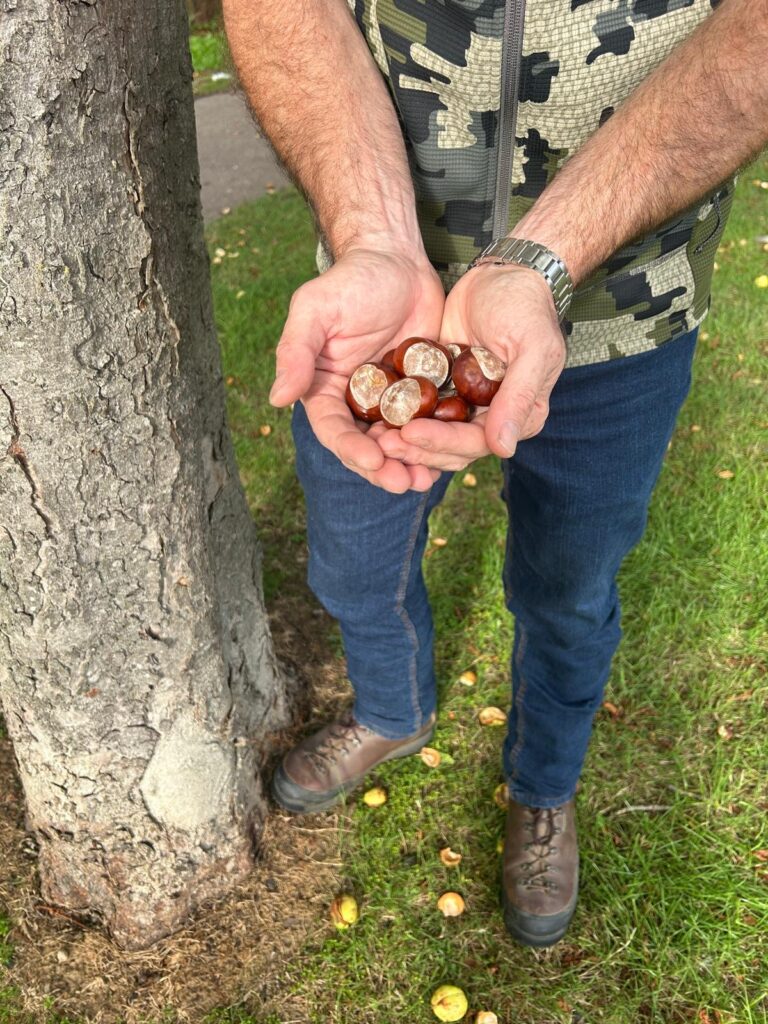
There’s a moment every year when conker season tree health quietly announces itself — not through the weather, not through the calendar, but through the trees. Horse chestnuts begin dropping their glossy conkers; their spiky husks split open, and the ground fills with unmistakable signs that the season has turned.
Conkers aren’t just nostalgic treasures from childhood. They’re one of the clearest reminders of how trees invest energy into the next generation. Each one carries genetics, resilience and decades of potential canopy — a future tree waiting for the right soil, the right moisture, and the right moment to begin.
🌰 Why Conkers Matter More Than We Think
Beyond their autumn charm, conkers also reveal how a tree has invested energy through the season— offering a small glimpse into its health, rhythm and resilience.
A mature horse chestnut spends the entire growing cycle building the resources needed to produce viable seeds. When conkers fall:
- the tree has completed its reproductive cycle
- energy begins shifting back into root recovery
- canopy growth slows as dormancy approaches
- soil moisture becomes critical for late‑season stability
As a result, conkers are more than seeds — they’re indicators of how well the tree has coped with the year’s stressors.
🍁 A Season of Change Beneath the Surface
While conkers scatter across the ground, the real work is happening underground. During autumn:
- soil moisture increases
- oxygen movement improves
- fine roots begin repairing summer stress
- trees prepare for winter dormancy
If you’re noticing thinning canopies, slow recovery or late‑season leaf drop, autumn is the ideal moment to look beneath the surface. Soil compaction, oxygen loss and drought stress often build quietly — long before symptoms appear above ground. This is why conker season tree health checks are so valuable, helping identify issues before winter arrives.
For deeper insight into how oxygenation supports recovery, you can read our article on root‑zone oxygenation after rainfall, which explores Terravent treatment for compacted soils.
🐿️ A Small Treasure With a Big Ecological Story
Every conker carries:
- decades of future canopy
- habitat for wildlife
- shade for landscapes
- resilience shaped by local genetics
Some germinate quickly. Some take their time. Each one follows its own rhythm — a quiet reminder that even the biggest trees begin with one small, hopeful step.
If you picked up a perfect conker this week, you’re holding the start of a future tree.
🌳 Looking After Your Trees This Autumn
Seasonal changes like conker fall are a perfect moment to check in on tree health. If you’re seeing:
- slow recovery after summer
- thinning canopies
- soil that feels compacted
- early signs of stress or decline
These are all indicators that the root‑zone may need attention. Therefore, autumn is the best window for soil assessments, root‑zone investigations and oxygenation treatments. Evidence‑based arboriculture helps trees recover before winter sets in — protecting canopy value, stability and long‑term resilience with our evidence‑based interventions designed to restore soil health, oxygen movement and root resilience before winter.
For more on horse chestnut ecology, the Woodland Trust’s conker search page offers a helpful overview.